
Friday, 02:14
You haven't slept in 36 hours. The build is finally green. Your partner texts again.
Build a startup, week by week.
Set prices. Hire people. Burn runway. Take investor money. Neglect your life. Get pushed by the board. Be an entrepreneur!
no MBA required · no clicker loop · the numbers are honest
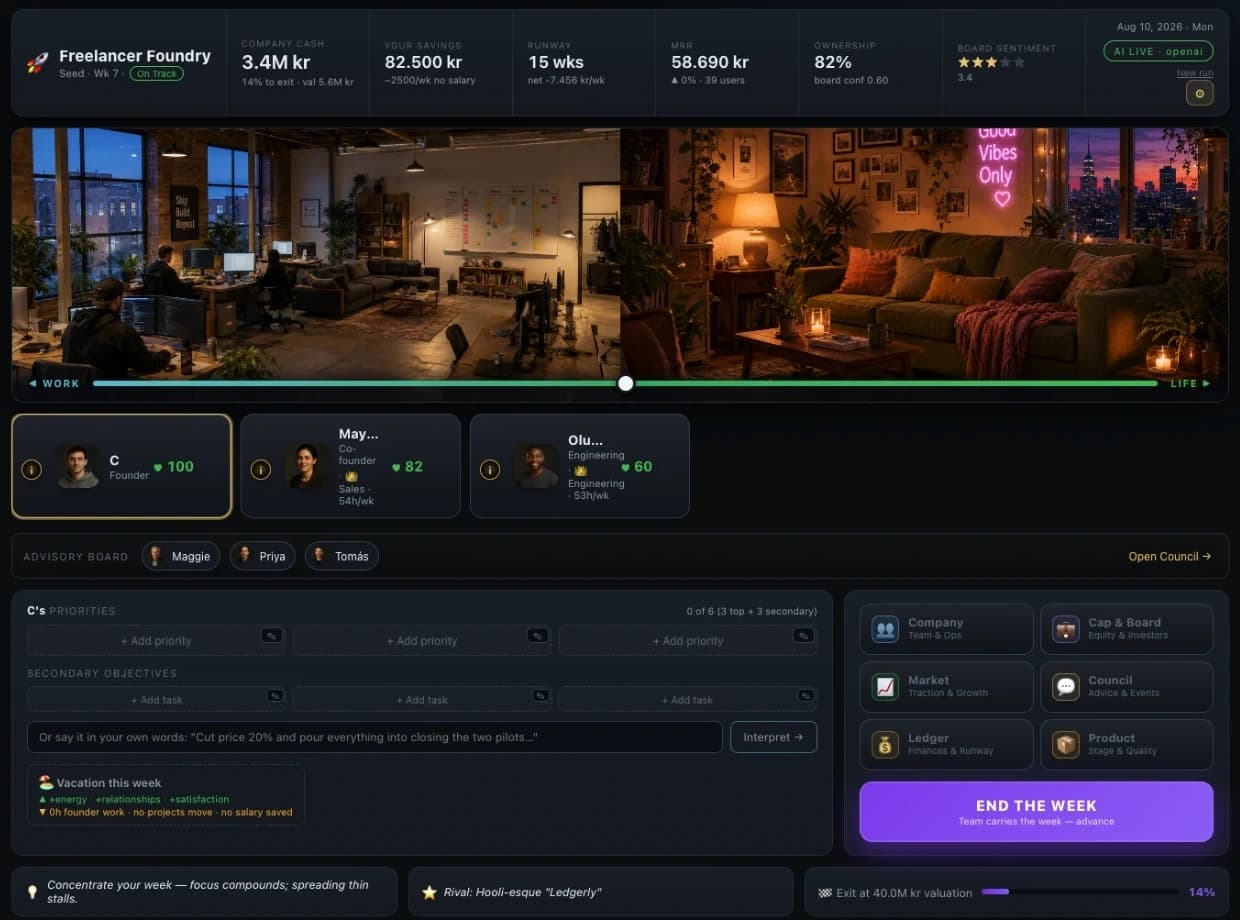
Exitpoint is not about guessing the right answer. It is about tradeoffs. Every week you decide where to spend time, money, and political capital. The product has to ship. You have to understand your customers. The team has to stay sane. The board has to believe in you. And you still have to be a person when the week ends.
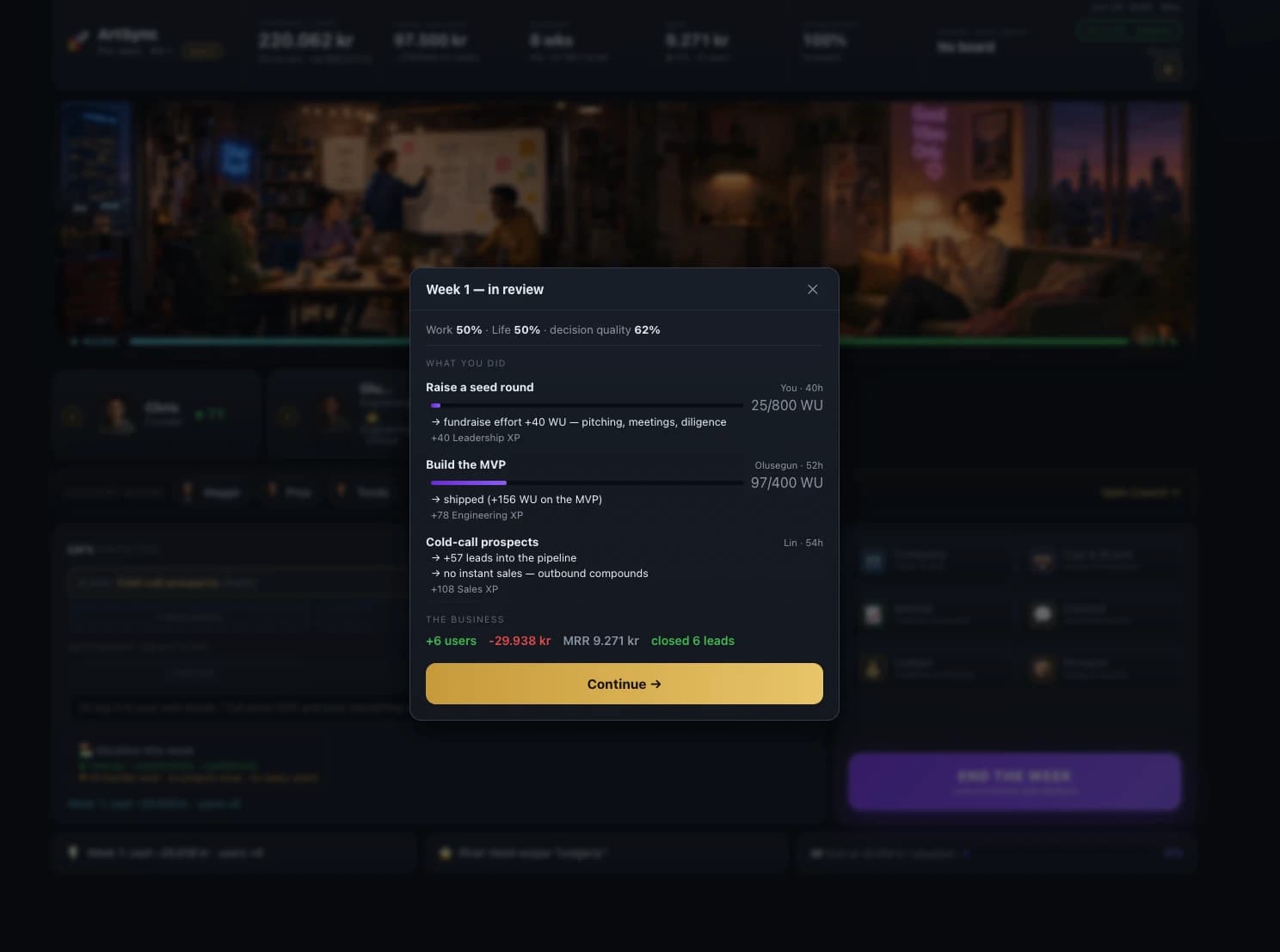
You have limited time, limited cash, and too many problems. You decide what gets attention, and what gets left to burn. When you press End the Week, the engine decides whether your choices made momentum, confusion, debt, trust, or chaos.
Your advisors are not tooltips in suits. They have names, memory, real-world data, and different ways of reading the company. One pushes for growth. One sees risk in the numbers. One sees the people before you do. They will not always agree with you. That is the point.

Sees risk in the numbers. Remembers how many times you said "we will raise again next quarter".

Pushes for growth. Asks whether your channels scale, or whether you just had a good quarter.

Sees the people before you do. Reads what users actually do, not what they tell the survey.
Cash, runway, team morale, board confidence, Decision Quality, burn, MRR, and cap table all hang together. You can push growth. The question is what you pay with: control, trust, quality, energy, or time.
You haven't slept in 36 hours. The build is finally green. Your partner texts again.

3M kr at 18M kr post. 21% dilution. Two board seats. Your lead investor is smiling. You should be too.

Three months of unaligned priorities. One of you has to say it. Tonight is when one of you does.

They have the numbers. They have your roadmap. They have an opinion. Two of them have a majority.

A pilot became a contract. The team feels it. For one night the building feels like the company you said it was.

She was the one who knew how the billing pipeline worked. She left a doc. It is not enough.
If you want a game where every decision just makes the graph bigger, Exitpoint is not it. Here, growth can weaken the company. A good fundraise can cost you control. A smart product call can make the board impatient. And sometimes the right decision is still ugly.
You do not play to be patted on the back. You play to find out what you would actually do.
The beta is free because the game still needs to be shaped by the right players: founders, operators, strategy nerds, and people who have had a startup idea in their notes app too long. You get access to an unfinished but playable run, and your decisions help make the engine sharper.
free during beta · limited access · feedback wanted
Maybe it ends in an exit. Maybe in an ouster. Maybe you discover the company survived. You did not.